Choosing a Plush by Texture, Weight and Size
To choose a plush by feel, read the product page for five things: the kind of coat, how floppy or firm the body is, whether there are beans in the paws, the size and the care label. Each one changes how the toy feels in your hands and how easy it is to live with. Here is how to read them, with real examples from our Douglas® range.
Start with the coat
Most product descriptions describe the coat, and coats tend to fall into one of three groups.
Short and sleek
A close, smooth coat shows off markings and feels velvety under the hand. Ed the Rottweiler is a good example: a sleek black coat with brown markings, made from velvety soft microfibre on a sturdy body. Short coats rarely tangle, and a quick smooth with a clean hand often keeps them tidy.
Long and layered
Longer fur gives you more to sink your fingers into. Smoke the DLux Wolf is made from faux fur in layered natural tones, finished with airbrushed accents. The trade-off is upkeep. Long fur flattens where it is held most and needs the occasional gentle brush to lift it again.
Curly
Curls are textured rather than smooth, and they look different again on a shelf. Gigi the Black Poodle has soft black curls and a red bow. At 8" (20 cm) and 82 g, she is roughly the size of an adult hand.
Floppy or firm: how the body is filled
Two plush of the same length can feel completely different because of how they are filled.
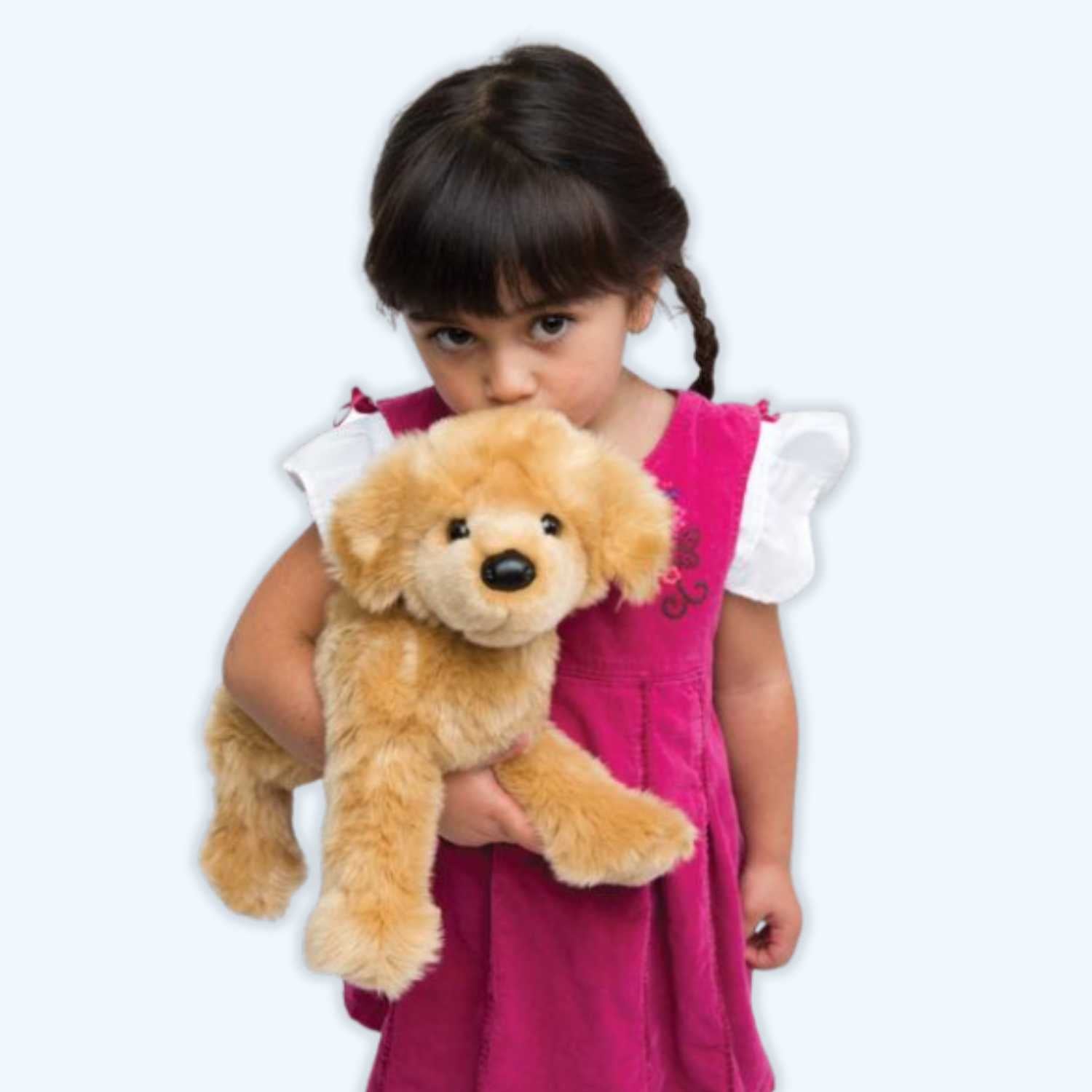
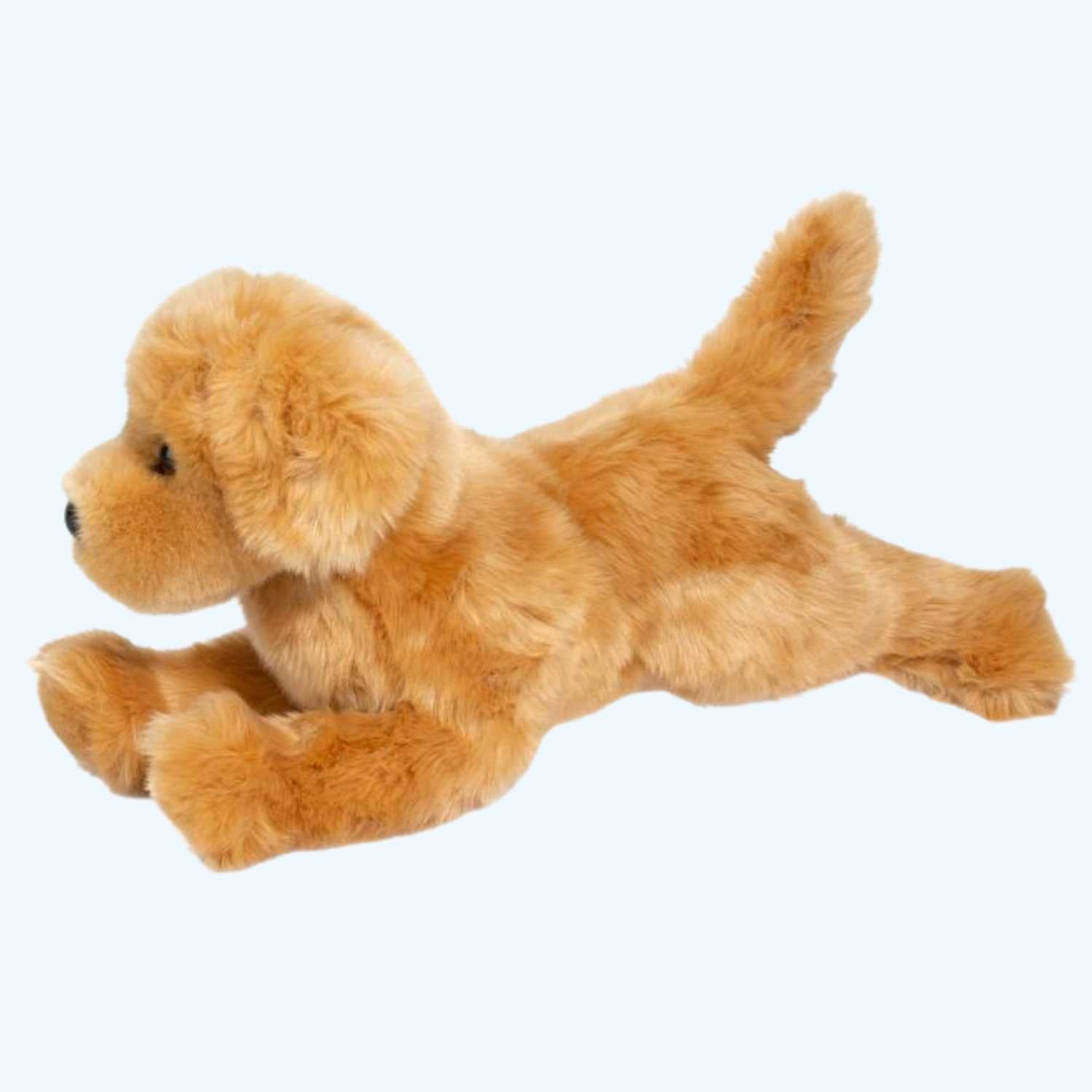
- Floppy and understuffed. Less filling means the body gives when you pick it up and drapes over an arm or a lap. Jake the DLux Black Lab has a softly understuffed body and a little weight in his paws. This style suits cuddling and lying-down poses.
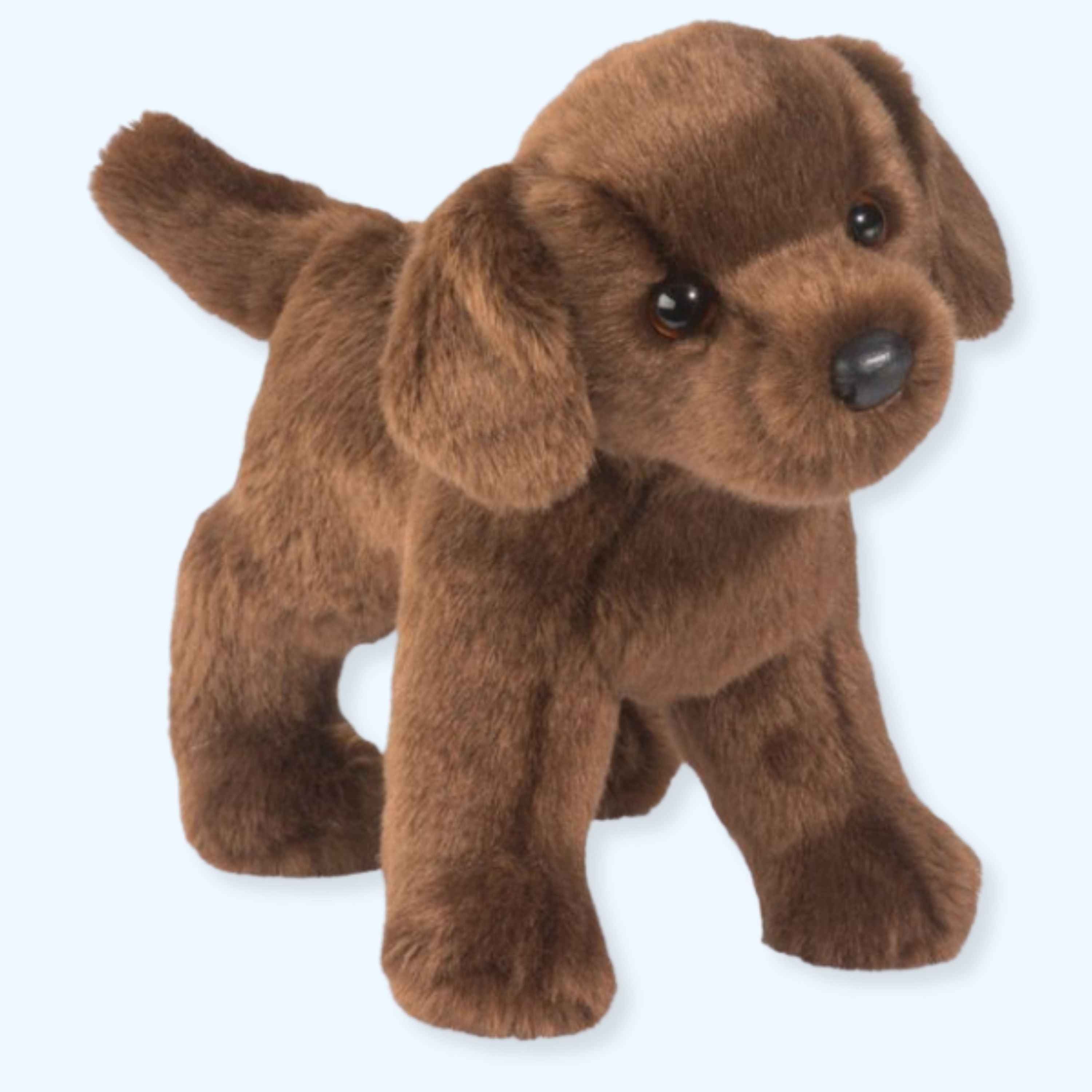
- Firm and standing. More filling holds a shape. Bear the Black Lab, a small dog at 10" (25 cm), has a sturdy standing pose, which suits shelves, play scenes and photos.
Neither is better made than the other. It comes down to whether the toy will mostly be held, or mostly be stood up and played with.
Weight: what the beans are for
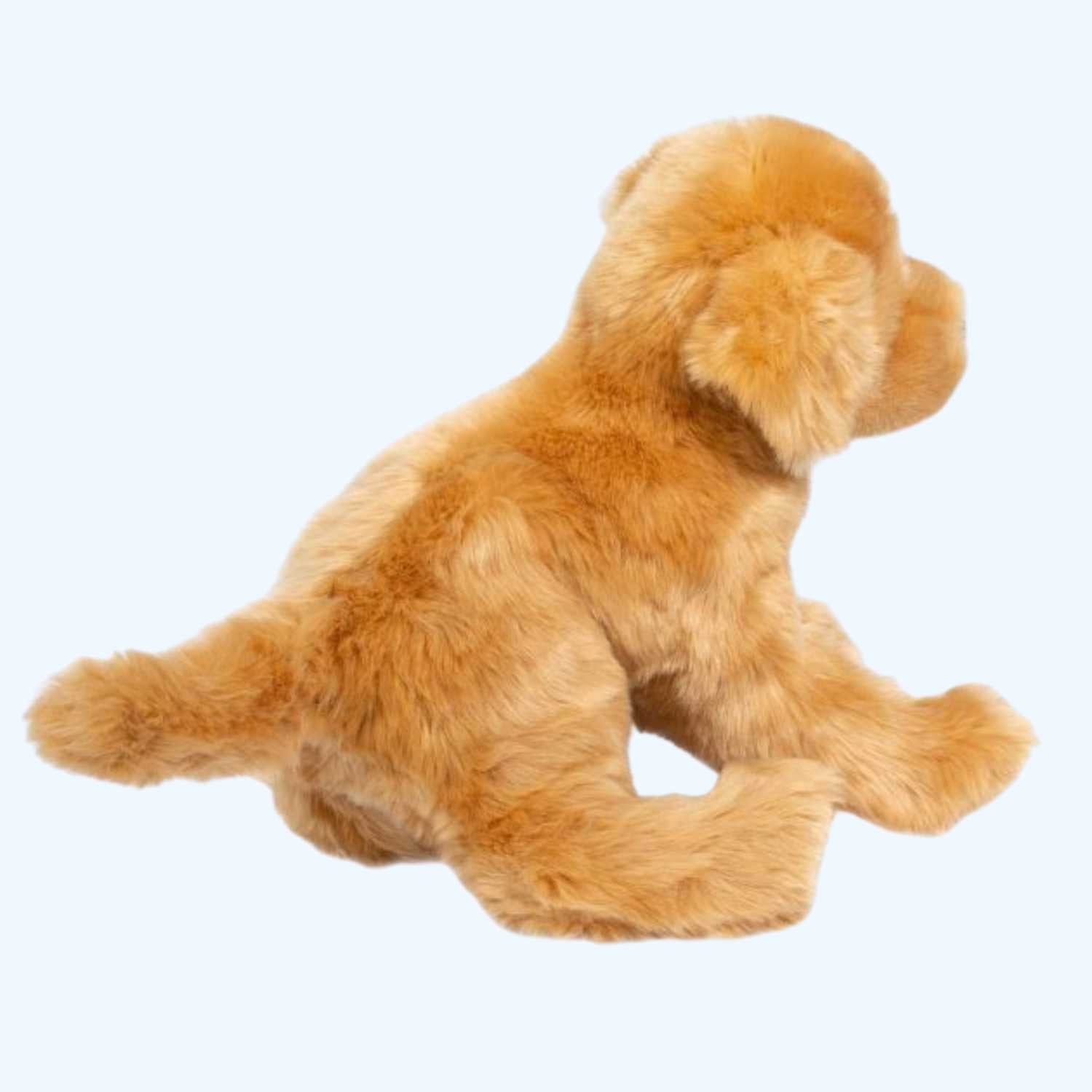
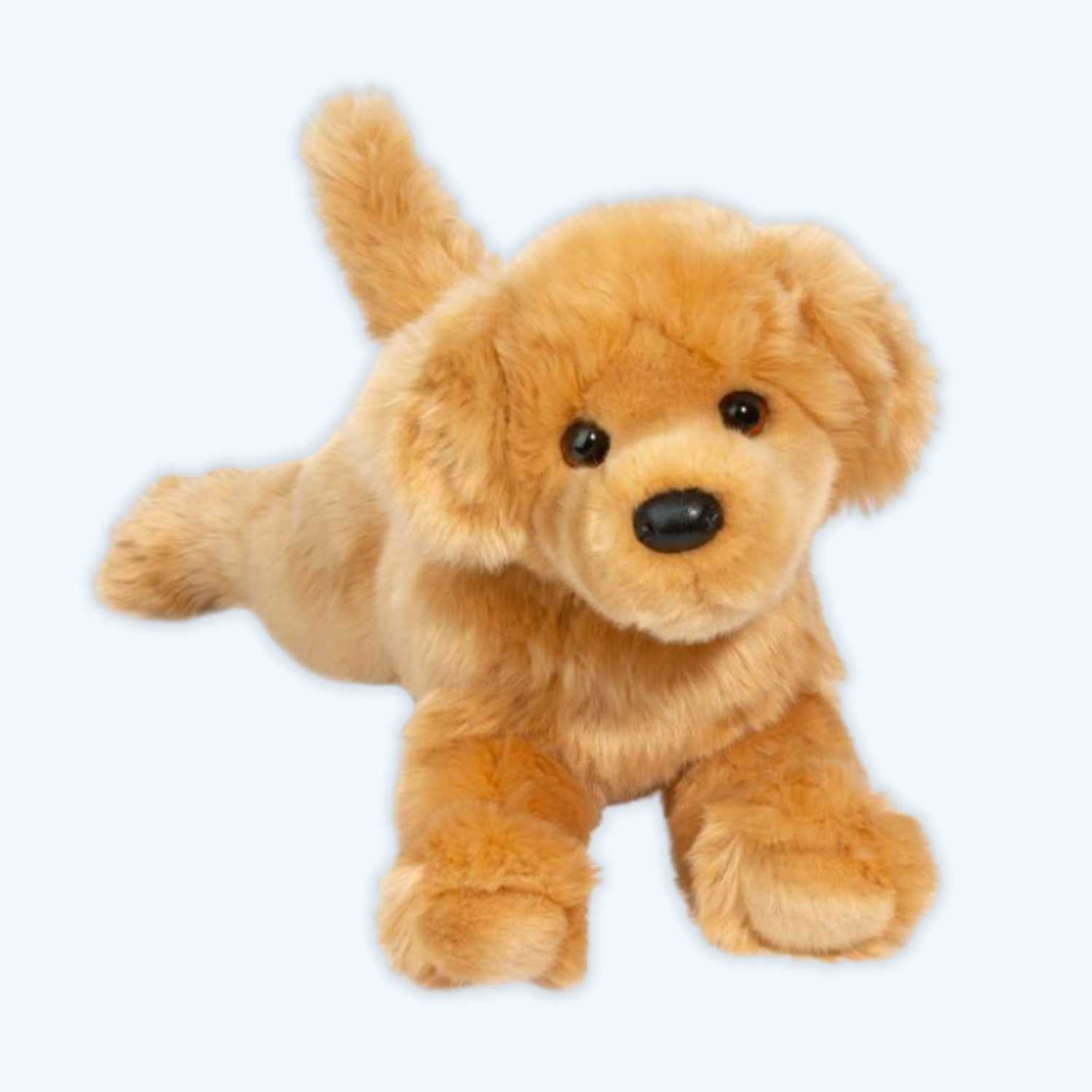
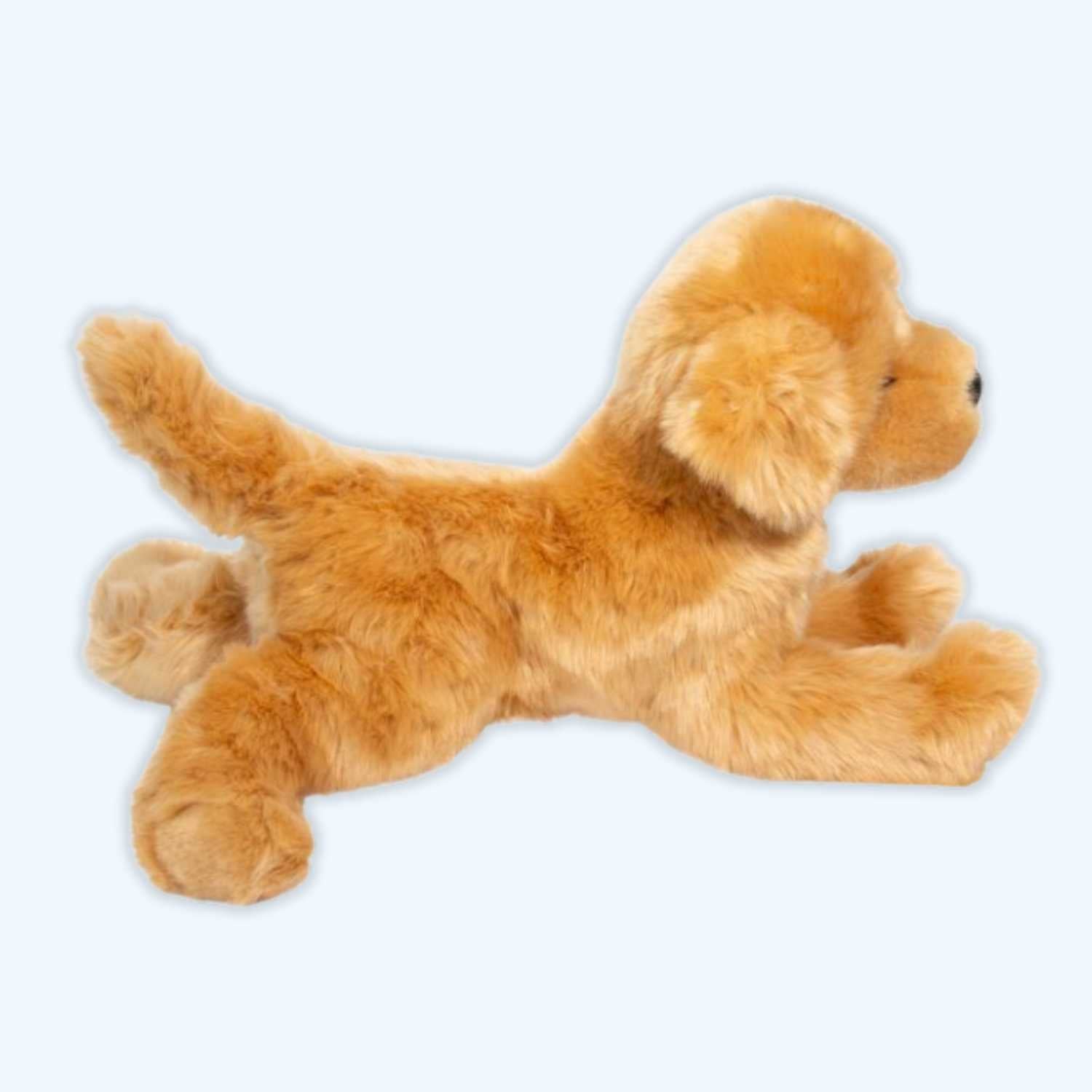
Some Douglas® plush have beans in their paws, and a few in the bottom or body too. Chester the Black Lab is one: his paws are bean-filled and his body is gently floppy. The beans add a little heft at the end of each leg, which helps a toy hold a pose and gives it a more natural feel when you pick it up.
Not every model has beans, so check the description for "bean-filled paws" if you want them. Most product pages also list the overall weight under Additional Information, which is handy for comparing. Gigi weighs 82 g, Chester 306 g and Jake 349 g, and the X-Large dogs are heavier still.
Size: from pocket to X-Large
Sizes on our product pages are measured from nose to tail, or by sitting height for dogs that sit. As a rough guide:
- Pocket (about 13–20 cm): small enough for a school bag or a coat pocket. Gigi is 8" (20 cm).
- Small (about 25 cm): easy to carry and still nice to hold. Bear is 10" (25 cm).
- Medium (about 41 cm): does a bit of everything, from play to cuddles. Chester is 16" (41 cm).
- Large (about 45–56 cm): often from the DLux range, which is extra furry. Smoke is 18" (46 cm) and Jake is 21" (53 cm).
- X-Large (about 58.5–61 cm): big enough to lean on, too big to carry around.
If you are buying a first plush as a gift, a medium is the safest bet. Our size guide lists the most popular dogs at every size.
Look at the face as well
Texture is not only fur. Many Douglas® dogs have a leatherette nose, a different texture from the coat, and some have airbrushed shading, often on the ears, that adds depth to the face. These details are a big part of the realistic look, and they are also a good reason to clean gently around the face.
Check the care label before you fall for the fur
Care decides how a plush feels a year from now. In our shop, more Douglas® plush are labelled surface clean only than machine washable, and the label is the rule to follow. Chester and Bear are machine washable; Smoke, Jake, Ed and Gigi are surface clean only. If a plush is going to travel in a school bag or join outdoor games, a machine-washable model makes life easier.
Our washing guide explains both methods step by step, and our guide on how to fluff up a soft toy shows how to bring a flattened long coat back.
A quick match
| If you want… | Look for… | Example |
|---|---|---|
| Fur to run your fingers through | Long or layered coat | Smoke |
| A dog that drapes over your arm | Floppy, understuffed body | Jake |
| A dog that holds a pose | Bean-filled paws | Chester |
| A shelf or play-scene dog | Sturdy standing pose | Bear |
| A bag-sized companion | Pocket size, about 13–20 cm | Gigi |
| Easy cleaning | "Machine washable" on the label | Chester or Bear |
Frequently asked questions
Which plush coat is the softest?
It depends what you mean by soft. A short, velvety coat feels smooth and even, while a long or layered coat feels deeper and fluffier. Think about the coats you already like to stroke, and choose the same kind.
What does "understuffed" mean on a product page?
It means the toy has a little less filling than a firm, standing plush, so the body gives and drapes when you hold it. It is a deliberate design choice, not a fault.
Are these plush suitable for young children?
Our Douglas® plush are labelled as suitable from 24 months, so they are not for babies. Whatever the size, check seams and eyes now and then.
Compare coats, sizes and care labels across our Douglas® dogs in UK stock.