Why Hugging a Soft Plush Dog Feels So Nice
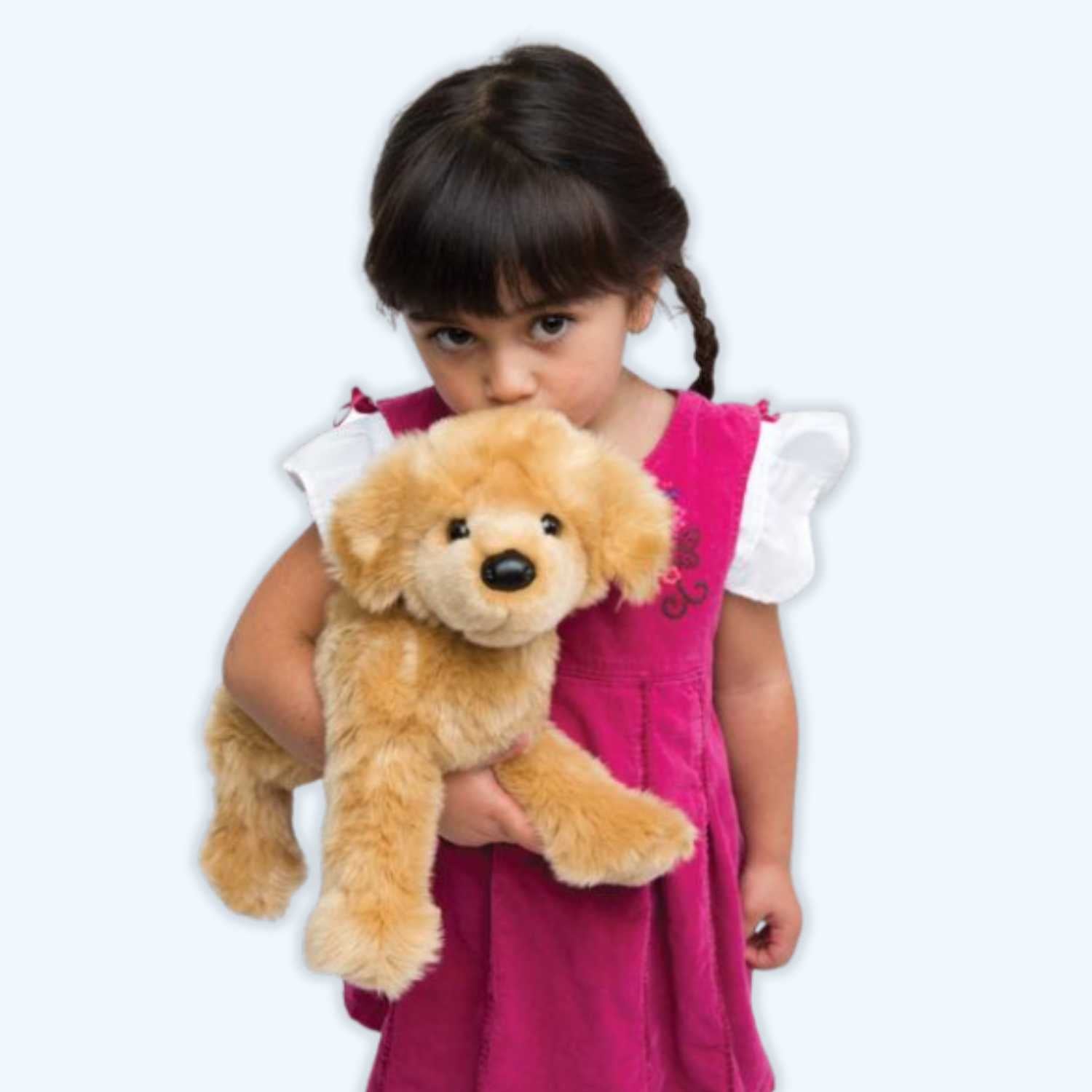
Hugging a soft plush dog feels nice for plain, physical reasons. The fur is pleasant to stroke, the fabric feels warm against your skin, a floppy body gives a little and settles into your arms, and the face is one you know. None of it needs a bigger promise than that. Here is what is going on, from your fingertips to a full-arm hug.
Your fingertips read the fur first
Before most hugs comes a stroke, and your fingertips are very good at it. A 1979 study of the human hand estimated that the fingertip has around four times as many touch-sensing units per square centimetre as the palm. That is why you can tell a short, velvety coat from a long, shaggy one with your eyes shut.
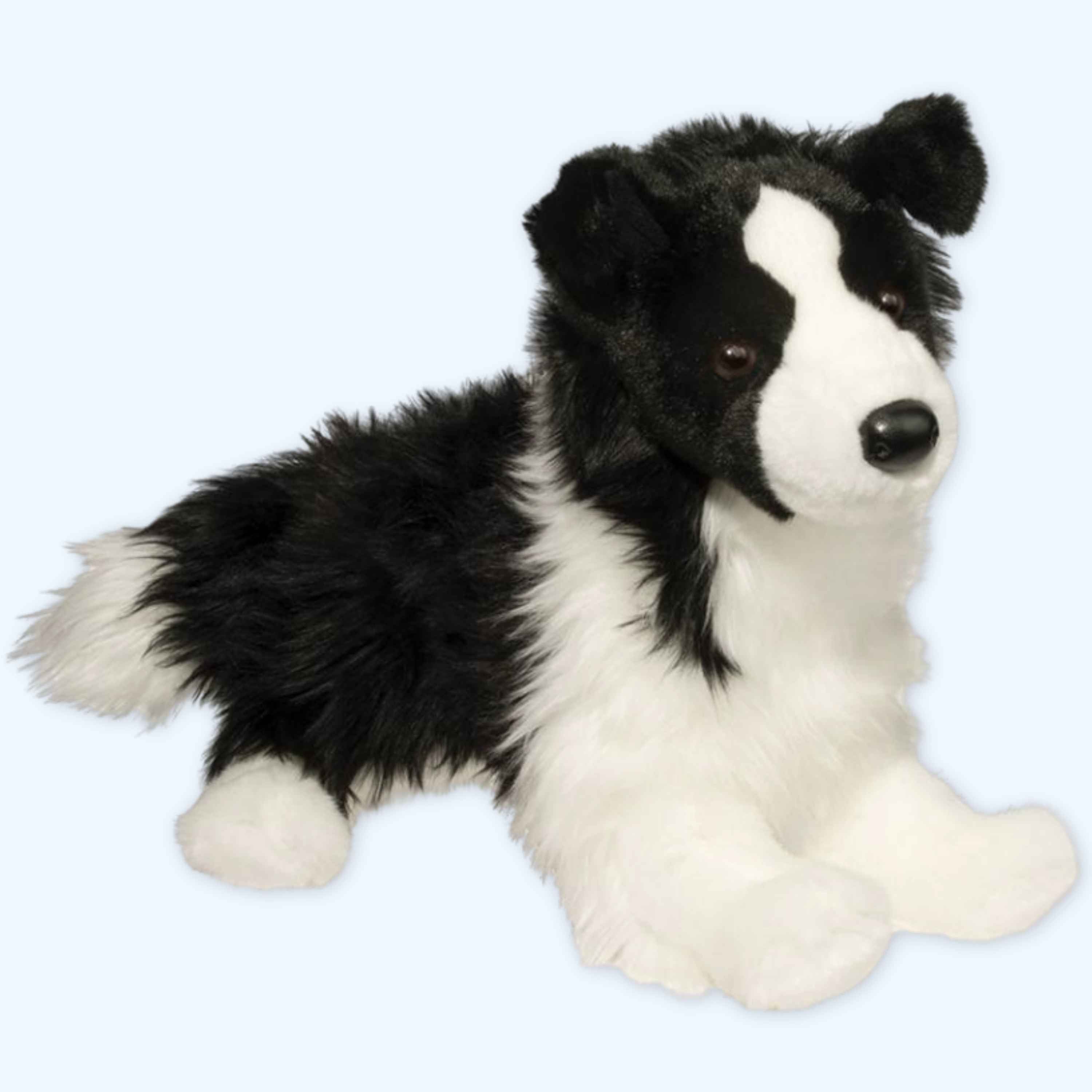
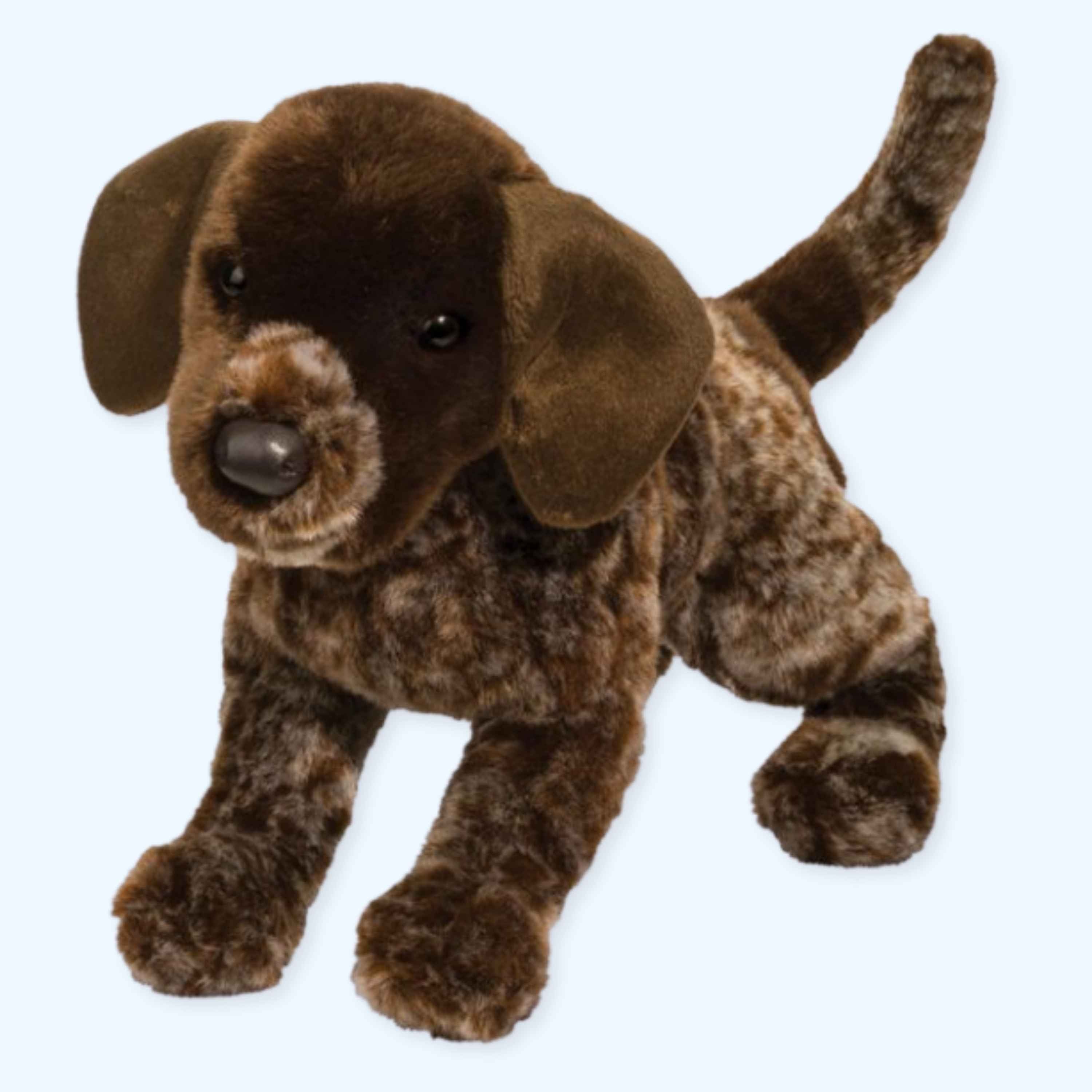
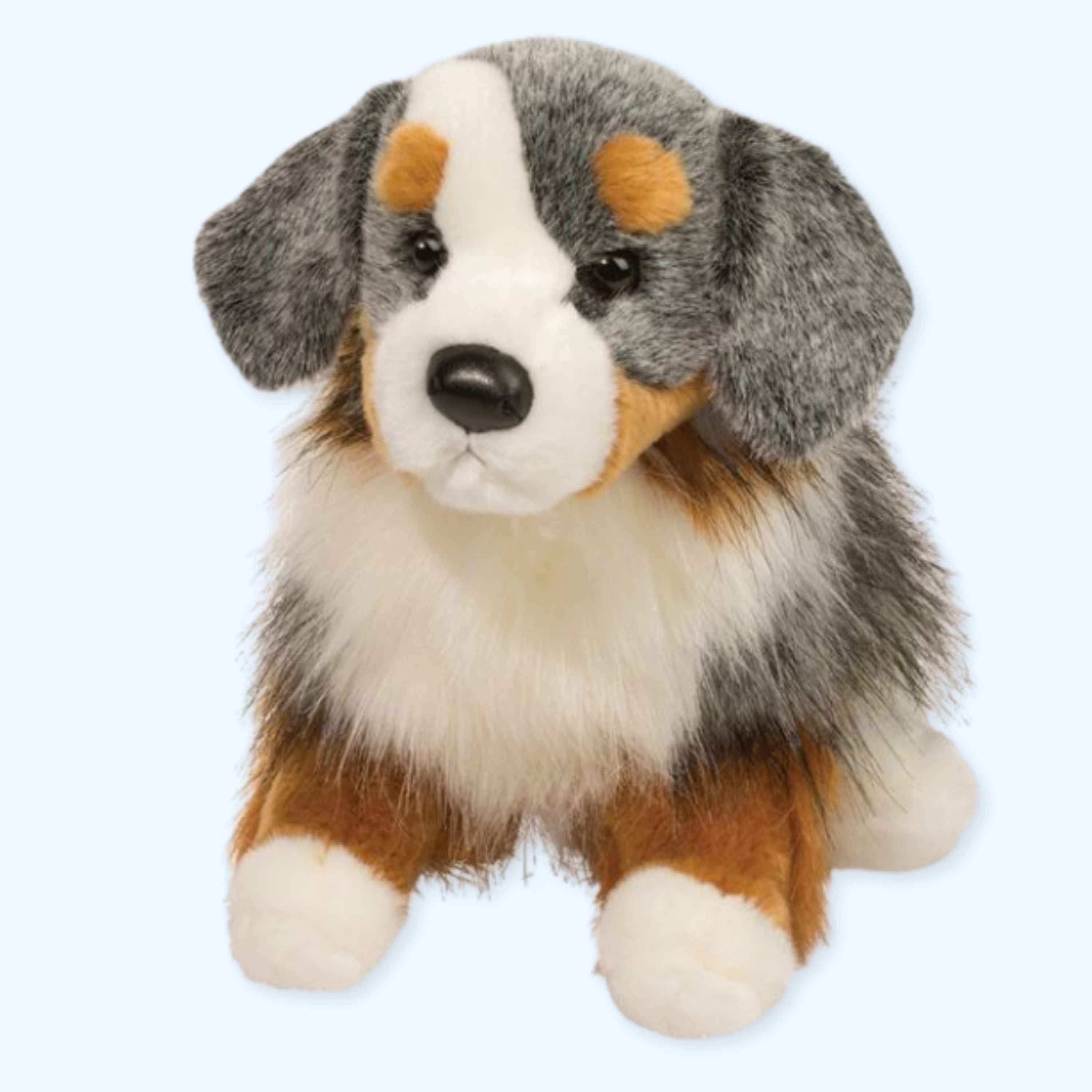
Plush coats vary more than you might expect. Twister, our Black Lab and Pit Bull mix, has a velvety black coat with crisp white markings. Sinclair the Australian Shepherd is the opposite, with a shaggy salt-and-pepper coat you can bury your fingers in. Neither is better. They simply feel different under your hand, and you may find you have a favourite without quite knowing why.
Slow, light stroking has its own nerve fibres
Scientists have looked closely at this kind of touch. In a 2009 study, researchers measured how a type of nerve fibre in the skin, known as C-tactile fibres, responded when a soft brush was moved across it at different speeds. The fibres responded most strongly at about 1 to 10 centimetres per second, which is a slow, unhurried stroke. Those were also the speeds the volunteers rated as the most pleasant.
A follow-up study in 2014 stroked volunteers' forearms at three temperatures: 18 °C, 32 °C and 42 °C. The same fibres responded best to slow strokes at 32 °C, which the researchers describe as typical skin temperature, rather than to the cooler or warmer ones.
This is research into how skin works, not a finding about soft toys, and we are not claiming more than that. It does match the way you probably stroke a plush dog without thinking about it: slowly, lightly, along the lie of the fur.
Why a plush feels warm and a spoon feels cold
Pick up a plush dog from a shelf and it feels warm. Pick up a metal spoon from the same shelf and it feels cold, even though both have been sitting at room temperature all day. The difference is how quickly each material carries heat away from your skin. Metals are good conductors, so they draw heat from your hand fast and feel cold. Insulating materials pass heat on slowly, so they feel warm.
Fur insulates by holding still air between its fibres, which is why a cat fluffs up its coat on a cold day. A plush coat works on the same idea, with a soft layer of fibres and the air caught between them. So it feels warm from the very first touch, whether it is against your arm or your cheek.
A little weight and a lot of flop
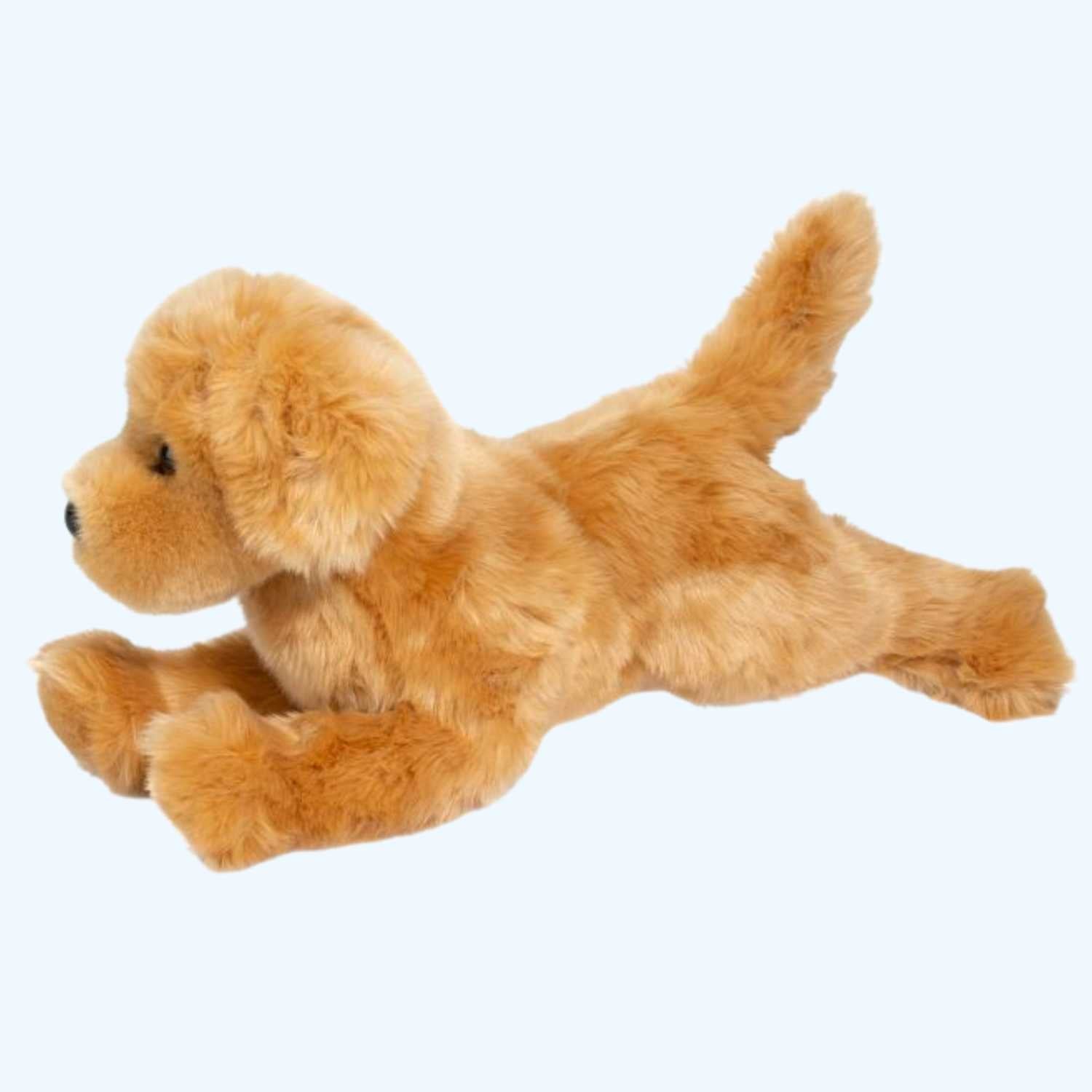
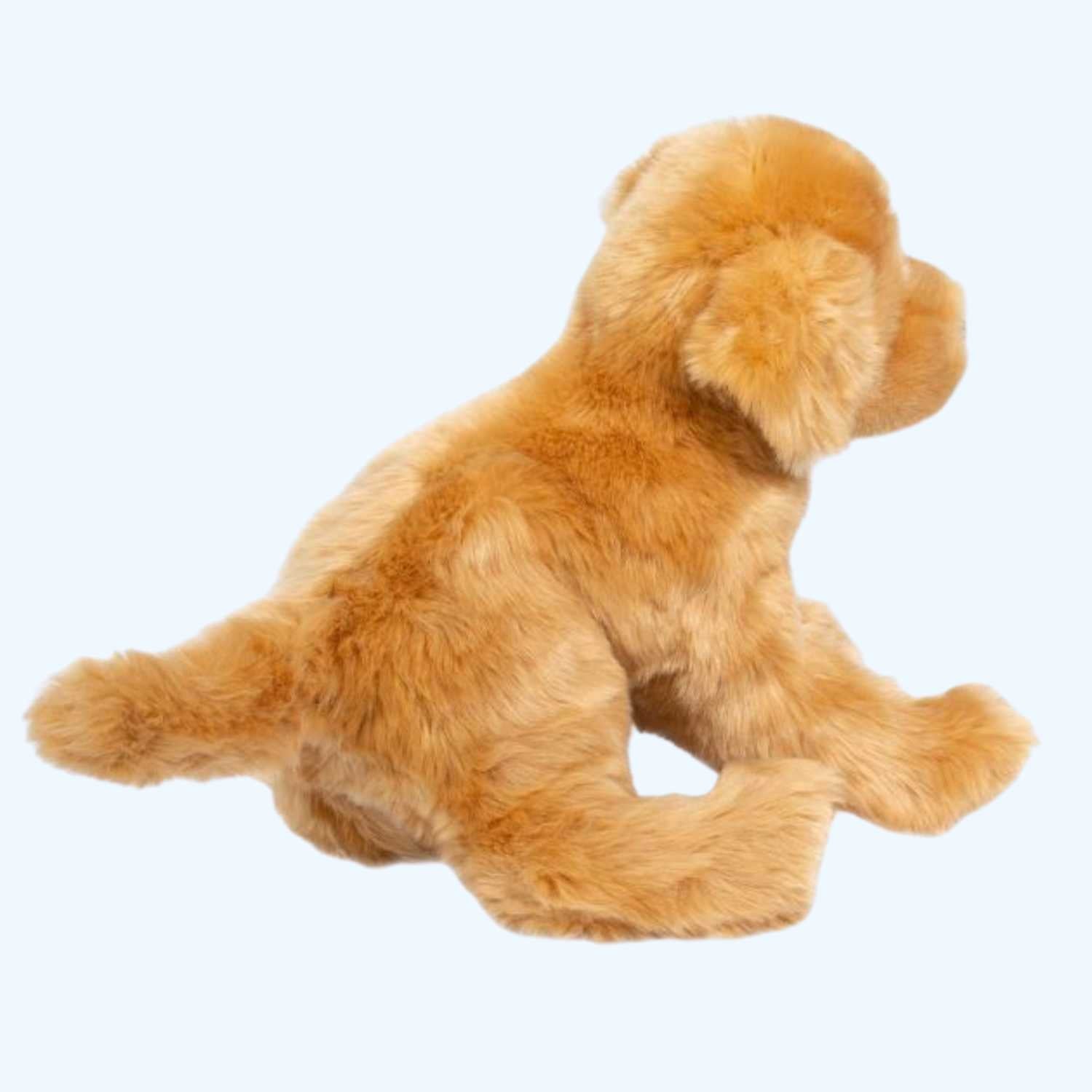
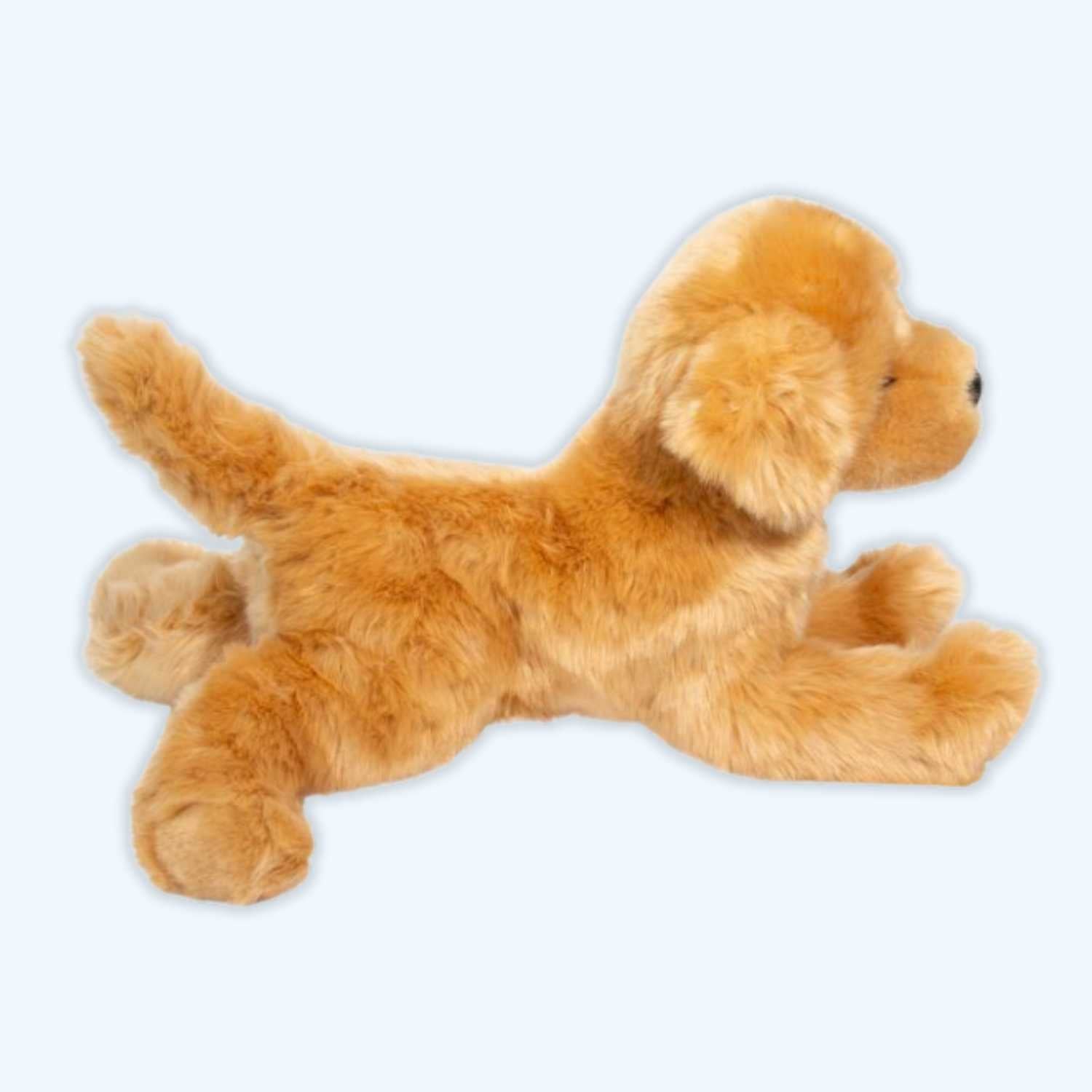
How a toy is filled changes the hug as much as the fur does. Some plush are packed firmly so they stand up straight, which is ideal on a shelf or in a game. Others are deliberately looser. Chester the Black Lab has bean-filled paws and a gently floppy body, so his legs hang over your arm rather than sticking out. Jake the DLux Black Lab goes further: his product page describes a softly understuffed body that settles naturally into your arms.
That bit of give is what makes a floppy plush feel more like holding an animal and less like holding a cushion. A few beans in the paws add a little heft and help the toy hold a pose. Not every model has them, so if this matters to you, look for words like "floppy", "understuffed" or "bean-filled paws" in the product description.
A face you know
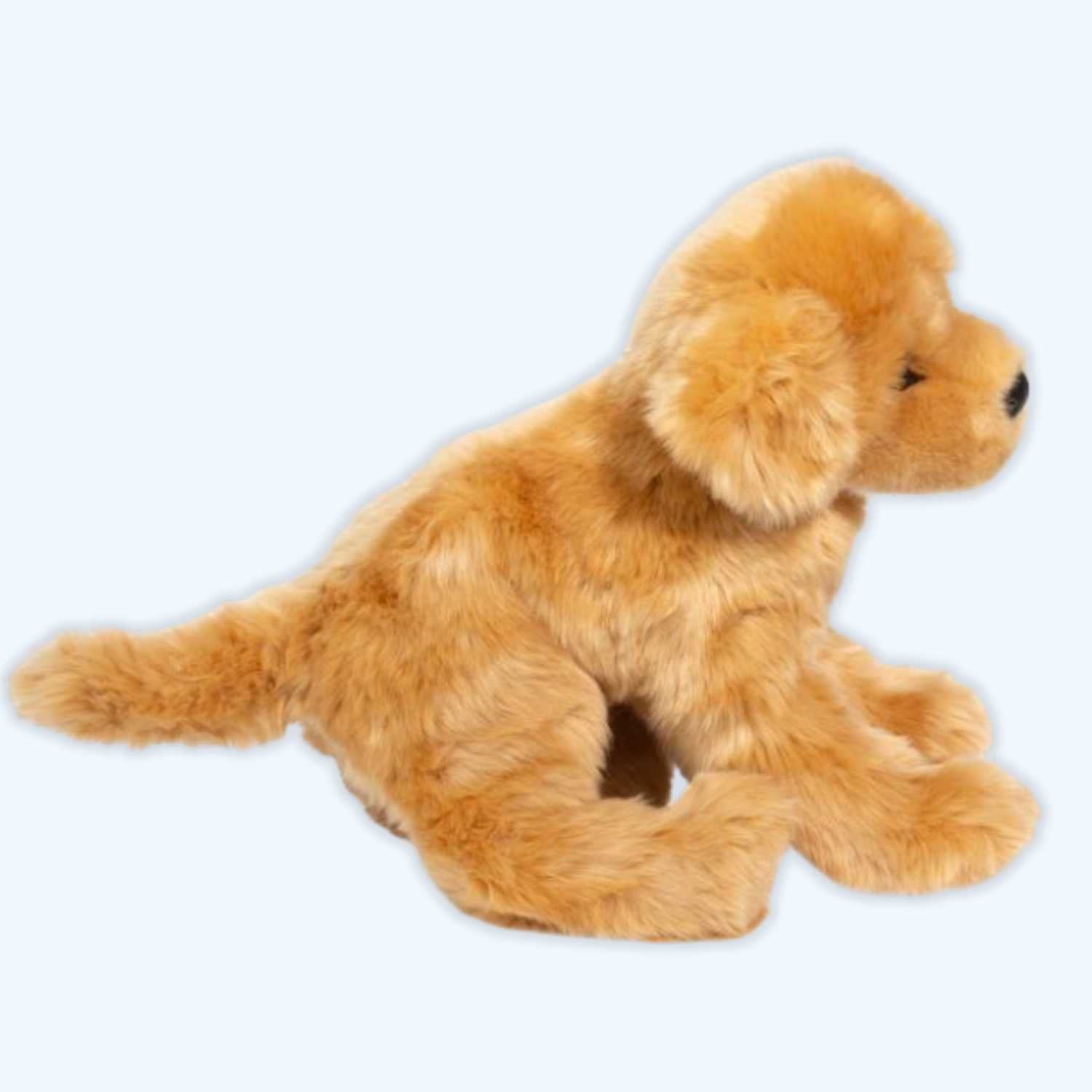
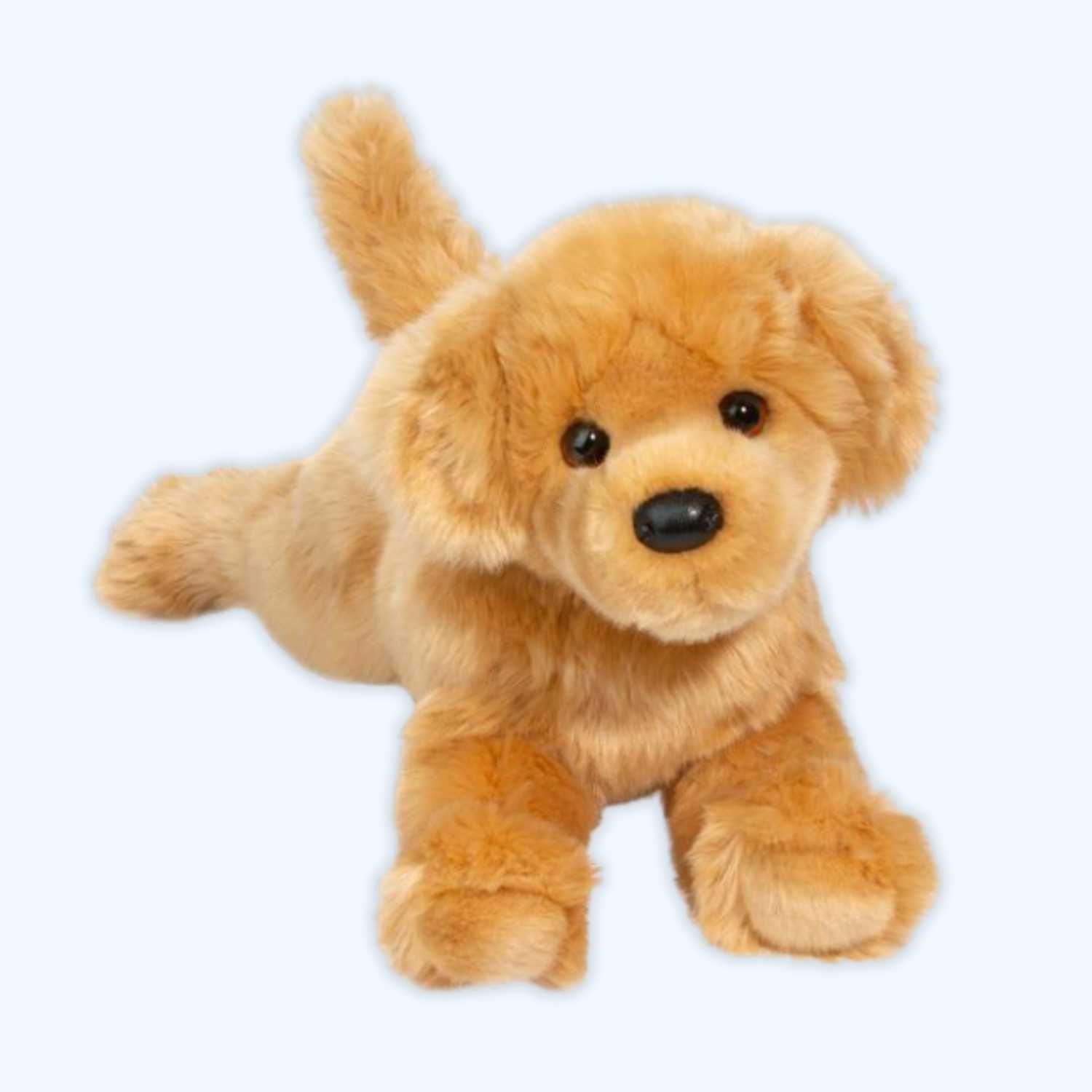
A hug is not only about touch. Realistic plush dogs are made to look like the breed, often with details such as a leatherette nose or airbrushed shading on the ears. If you grew up with a Labrador or a collie, a plush version of that breed can look familiar straight away.
Familiarity also builds over time. A toy that gets a name, comes on holiday and sits in the same spot every evening becomes part of the household. You may notice it even picks up the smell of home, which might explain why wash day is not always popular. There is more on how one toy becomes the favourite in our guide to why children love their soft toys.
Size changes the hug
The same breed can feel completely different at different sizes:
- Pocket size: Mini Goldie, a tiny Golden Retriever, is 6" (15 cm) and weighs 94 g. She sits in one hand, so she is more for stroking and carrying than for hugging.
- Medium: at 16" (41 cm) and 306 g, Chester fills your arms without being awkward to carry.
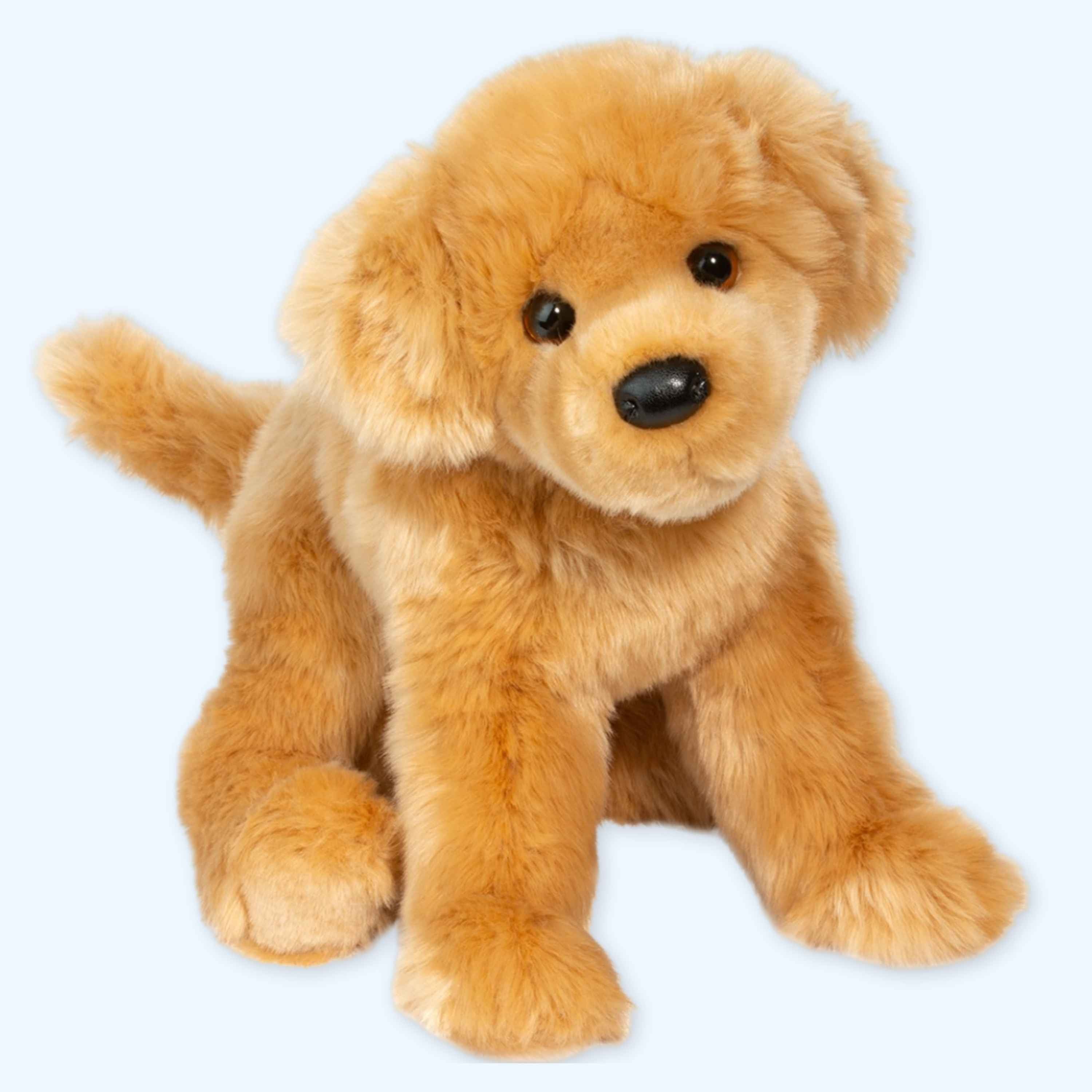
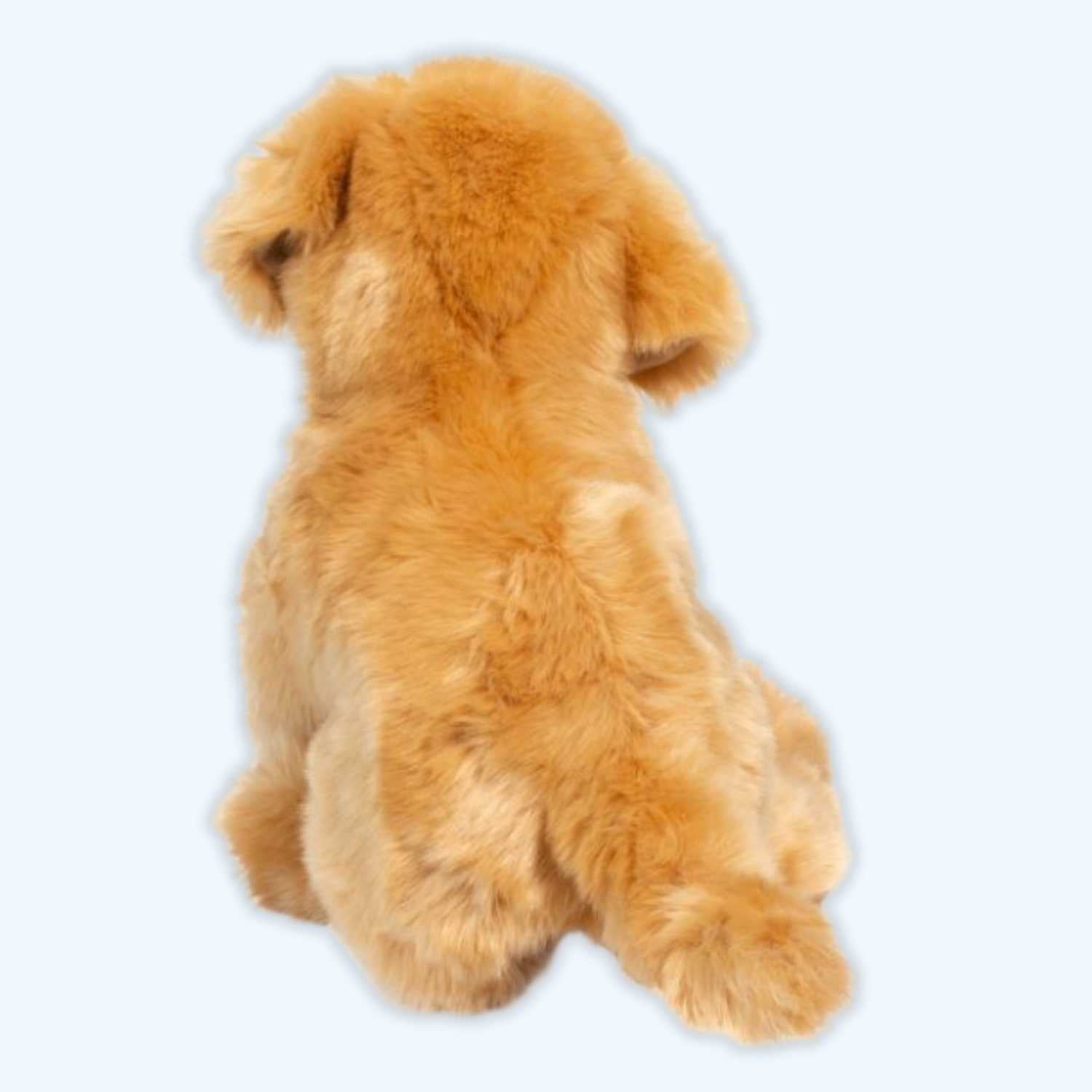
- X-Large: Honey the Golden Retriever is 23" (58.5 cm) and weighs 1,361 g. She is the kind you lean into on the sofa rather than take on the bus.
Our size guide compares them all, with the most popular dogs at each size.
Keeping that soft feel
Hugging presses fur down over time, especially on the side that gets held most. A soft brush, used gently in the direction the fur lies, lifts most of it again. Our guide to fluffing up a flat soft toy covers the details, including why tumble dryers and hairdryers should stay well away. Before any wash, check the care label: some Douglas® dogs are machine washable, but many are surface clean only.
Frequently asked questions
Why does hugging a stuffed animal feel good?
Mostly for physical reasons: soft fur that is pleasant to stroke, fabric that feels warm because it draws heat from your skin only slowly, a floppy body that settles into your arms and a familiar face. Research has also found nerve fibres in the skin that respond most to slow, gentle stroking.
Is it odd for adults to hug a soft toy?
No. There is no upper age limit on liking something soft. The Douglas® dogs we sell carry an age label of 24 months and up, and that is the only age rule printed on it.
Which kind of plush is best for hugging?
For a full-arm hug, look for a medium or larger size with a floppy or understuffed body. If stroking is what you enjoy most, the type of coat matters more than the size.
Find a floppy favourite among our Douglas® dogs in UK stock.