How to Wash a Douglas Dog or Soft Toy Without Ruining It
Start with the care label. Some Douglas® plush are labelled machine washable, but more of them say surface clean only, and that one line decides the method. Surface-clean toys get a barely damp cloth and mild soap, never a soak. Machine-washable ones can go in on a cool, gentle cycle inside a pillowcase. Either way, dry them in the air, never in a tumble dryer.
Why the label comes first
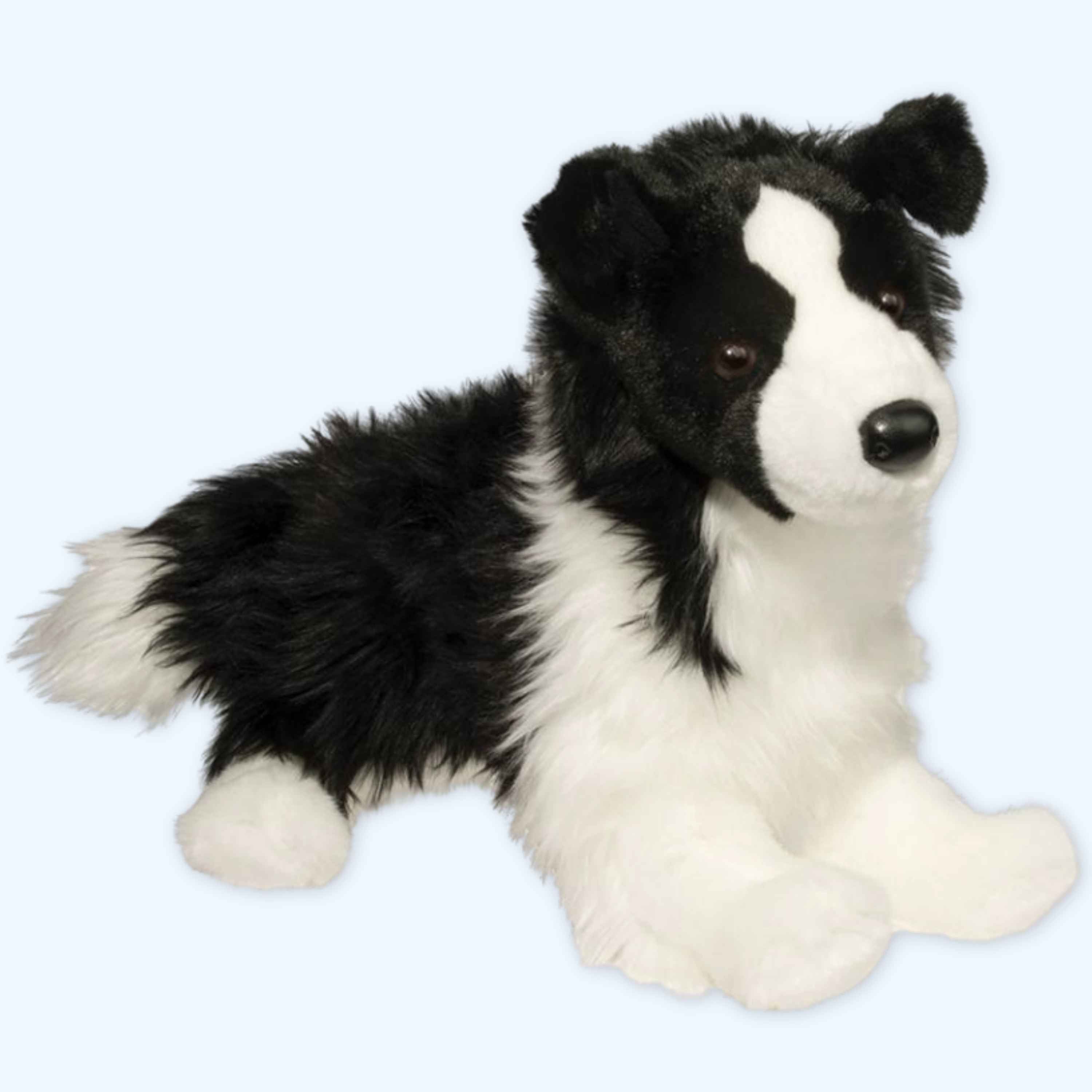
Douglas® plush are not all made the same way. Of the Douglas® toys in our shop, more than half are labelled surface clean only or surface washable, and nearly a quarter are labelled machine washable. Two Border Collies show the split: Chase is surface clean only, while Herdie is machine washable.
The difference is in the build. Some models have airbrushed shading, some have long, layered fur, and some carry beans for weight — Chip the Springer Spaniel, for example, has beans in his bottom and paws. Those are the details a washing machine can spoil. Not every model has them, which is why the label, not a general rule, is the thing to follow.
The care instruction is on the sewn-in label and on every product page in our shop. If the label has been cut off and you can't identify the model, treat the toy as surface clean only. It's the safe default.
How to surface clean a Douglas dog
Use this method for anything marked surface clean only or surface washable, and for any toy you're unsure about. Take off any harness, vest or collar first.
- Shake and brush. Give the toy a shake outdoors, then run a soft brush through the fur to lift dust and crumbs. A vacuum on low suction with an upholstery nozzle also works.
- Mix a weak solution. A few drops of mild liquid detergent or washing-up liquid in a bowl of cool water. You want a few suds, not a bubble bath.
- Dab the mark. Wring a pale cloth out until it's barely damp, then dab and lightly stroke the mark in the direction the fur lies. Don't scrub.
- Take the soap off. Go over the same patch with a second cloth dampened in plain water. Soap left in the fur tends to pick up fresh dirt.
- Blot and brush. Press a dry towel onto the patch, then brush the fur back into place while it's still a little damp.
Leave out bleach, disinfectant wipes and strong stain sprays. They can mark fur or fade colour, so test anything new on a hidden patch, such as under the tummy.
How to machine wash a soft toy labelled machine washable
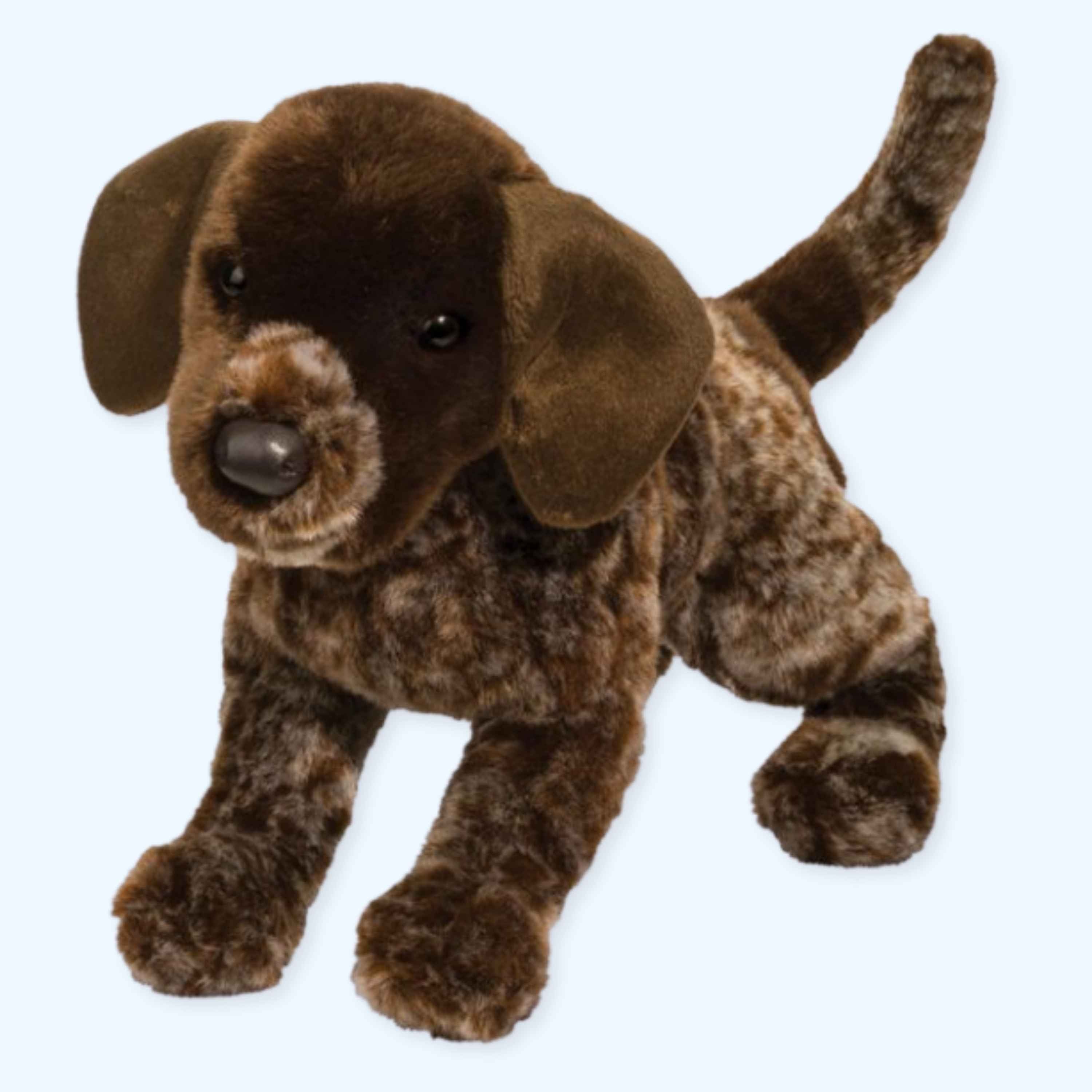
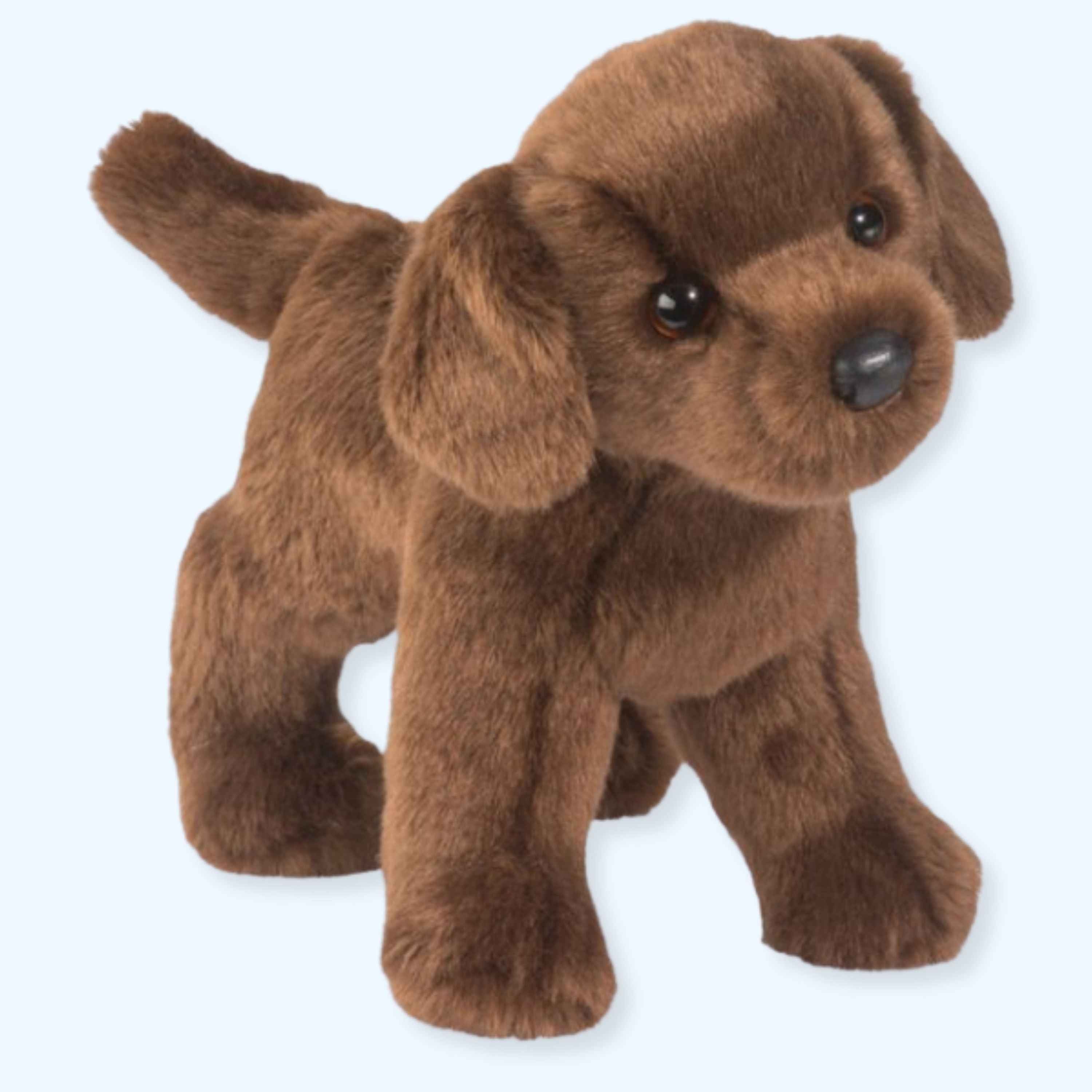
If the label says machine washable — as it does on Tucker, our small 25 cm chocolate Lab — a gentle wash is fine. A few habits keep the fur looking good afterwards.
- Bag it. Zip the toy into a mesh laundry bag or tie it inside a pillowcase, so the eyes and nose aren't knocked against the drum.
- Keep it cool and gentle. Choose a delicates or wool programme at 30°C or below, with a low spin.
- Use a little mild detergent. Skip fabric conditioner and bleach. Conditioner can coat the fibres and leave fur limp.
- Cushion it. Wash it with a couple of light-coloured towels, not jeans or anything with zips.
- Unload straight away. Don't leave it sitting squashed and wet in the drum.
What about big plush?
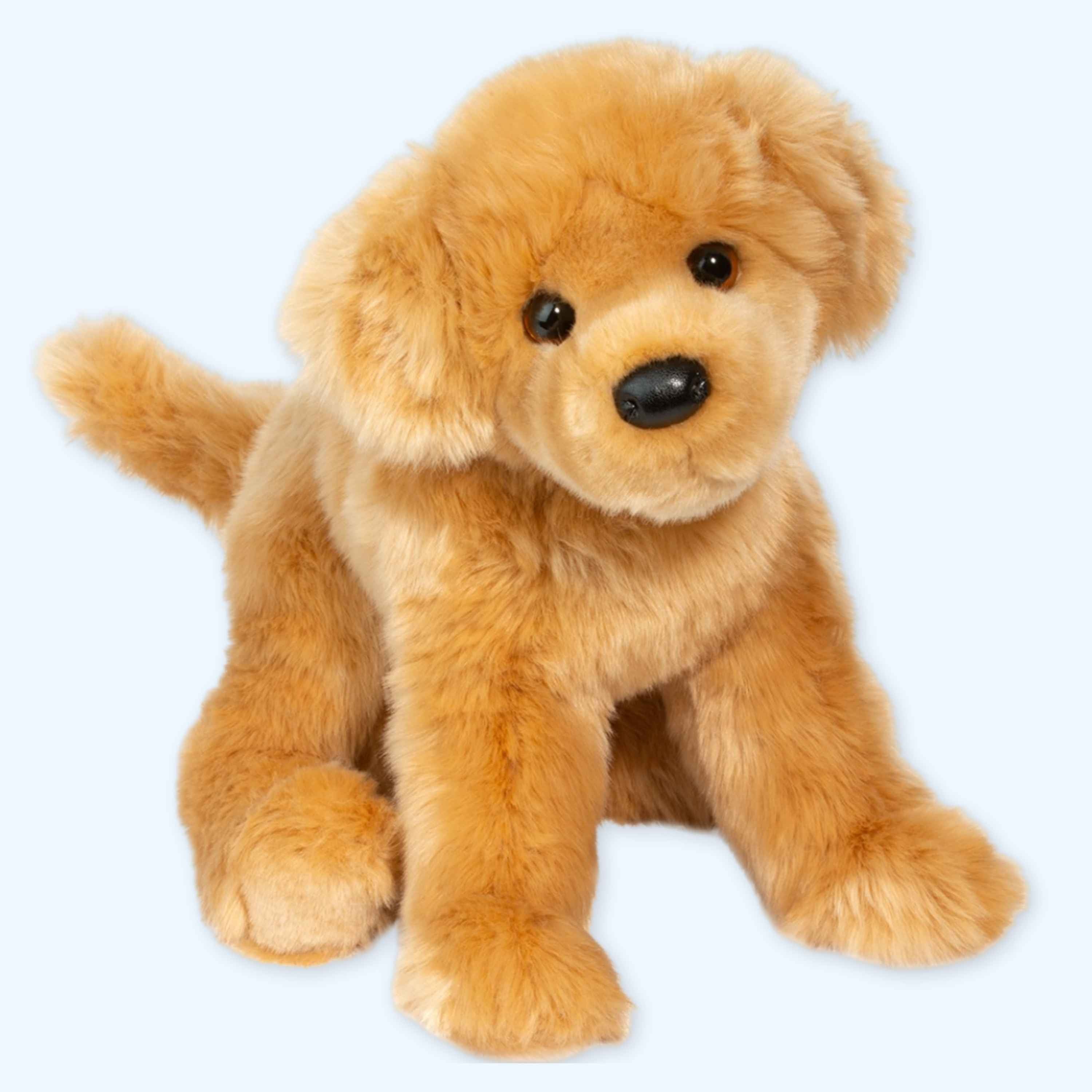
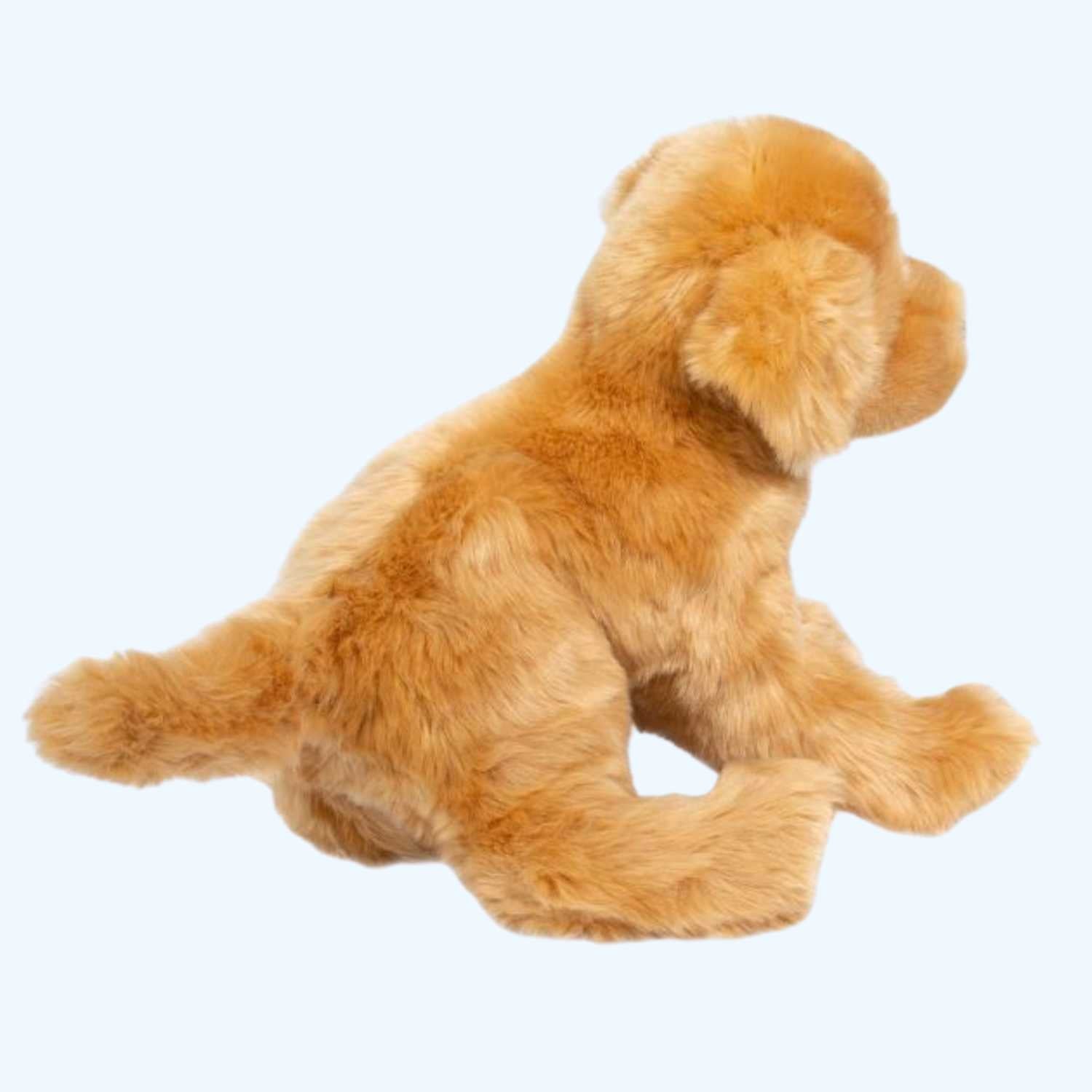
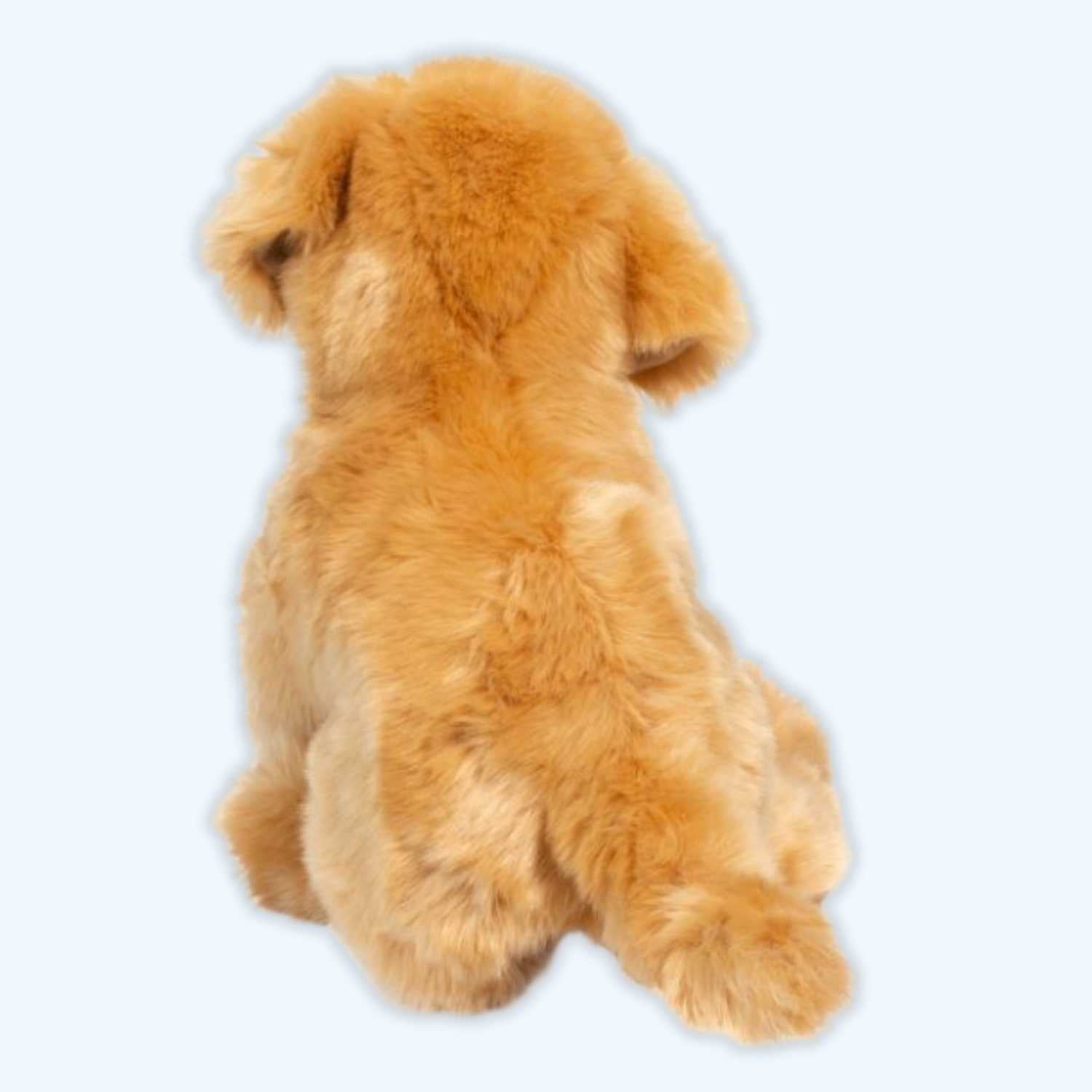
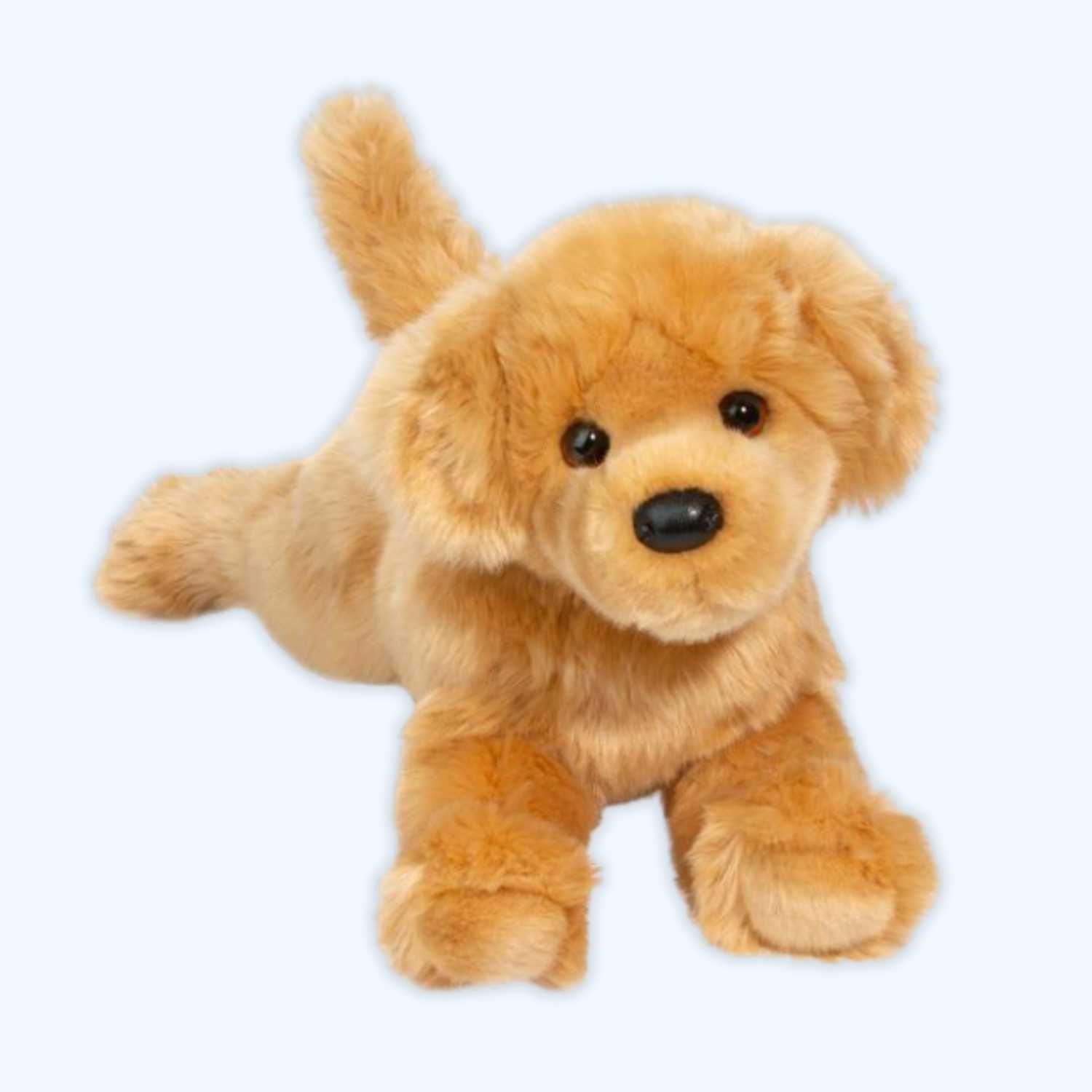
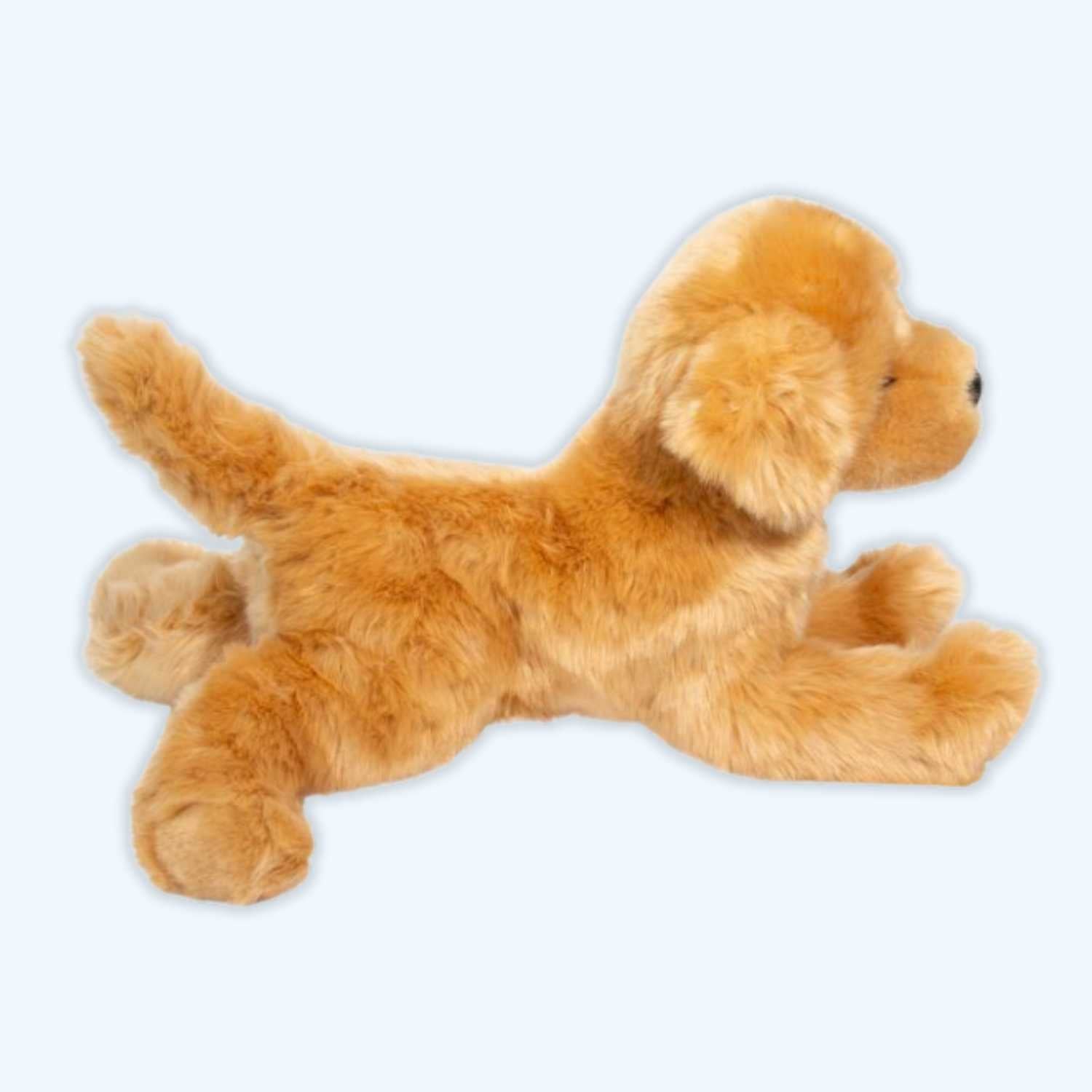
Size still matters when the label says yes. Lettie, our 56 cm DLux Yellow Lab, is labelled machine washable, but a large plush needs space to move freely in the drum, and once soaked it turns heavy and slow to dry. If it won't fit loosely inside a pillowcase, surface clean it instead.
How to dry a Douglas dog
Drying is where most plush gets spoiled, because the quick fixes all use heat. Plush fur is usually synthetic, and synthetic fibres can frizz, harden or melt when they get hot. That damage doesn't brush out.
- Roll the toy in a thick towel and press to squeeze out water. Don't wring or twist it.
- Reshape the head, ears and legs with your hands.
- Brush the fur the way it naturally lies while it's still damp, so it sets in the right direction as it dries.
- Sit it upright on a drying rack or a clean, dry towel in a warm, airy room, and turn it every few hours.
- Keep it away from radiators, heaters and long spells in strong sun, which can fade colour.
- Be patient. Larger and bean-filled toys take much longer than you'd expect. Squeeze the thickest part: if it feels cool or damp inside, leave it longer.
So: no tumble dryer, no hairdryer, no airing cupboard. Mould likes warm, damp, still air, so make sure the toy is dry right through before it goes back on a bed or a shelf.
Can a Douglas dog get wet?
A splash or a drizzly walk is fine: blot it, then air dry it as above. A full soak is different, especially for surface-clean models. Water gets deep into the filling and any beans, takes days to dry and can leave a musty smell. Keep those ones out of the bath, the paddling pool and the sea.
Keeping it fresh between cleans
- Brush it every week or two with a soft brush. If the fur has already gone flat, here is how to fluff up a flat or matted soft toy.
- Air it near an open window now and then.
- For a quick refresh, mist a little fabric spray onto a cloth rather than the fur, then wipe it over. Check the spray is safe for the fabric first.
- Look it over while you're there: seams, eyes and nose. A small split is far easier to close early.
If you're choosing a companion for a child who takes it everywhere, washability is worth weighing up front — our guide to choosing the right soft toy covers it.
Frequently asked questions
Can you put a Douglas dog in the washing machine?
Only if its care label says machine washable. Many Douglas® plush are surface clean only; clean those with a barely damp cloth and mild soap instead.
Can you tumble dry a Douglas dog?
No. Heat can permanently frizz or flatten plush fur. Press the water out with a towel, brush the fur and let it air dry.
How long does a soft toy take to dry?
Longer than it feels. Small toys dry fastest; large or bean-filled ones can take several days. Check the thickest part is dry inside before it's cuddled again.
Browse Douglas dogs in UK stock, each with its care instruction on the product page.